


As a seasoned supplier of curtain side semi - trailers, I often encounter inquiries from clients about how to measure the internal volume of these essential transport units. Measuring the internal volume accurately is crucial for several reasons. It helps in determining the cargo capacity, optimizing loading patterns, and ensuring compliance with transportation regulations. In this blog post, I will share some effective methods to measure the internal volume of a curtain side semi - trailer.
Understanding the Basics of Curtain Side Semi - Trailers
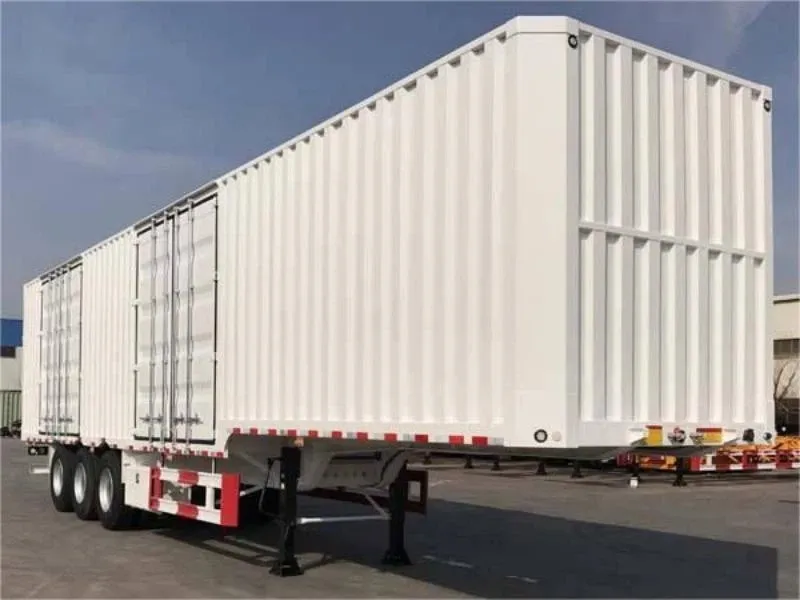
Before delving into the measurement process, it's important to understand the structure of a curtain side semi - trailer. These trailers are characterized by their flexible curtain sides that can be rolled up, providing easy access to the cargo area. The interior of the trailer is typically a rectangular or near - rectangular space, but factors such as wheel arches, structural supports, and uneven floors can complicate the measurement.
Tools Required for Measurement
To measure the internal volume of a curtain side semi - trailer, you will need the following tools:
- Measuring Tape: A long, flexible measuring tape is essential for measuring the length, width, and height of the trailer. A tape measure with a length of at least 30 meters is recommended.
- Level: A spirit level can be used to ensure that the trailer is on a flat surface and to measure the height accurately.
- Calculator: You will need a calculator to perform the necessary mathematical calculations.
Step - by - Step Measurement Process
Step 1: Prepare the Trailer
First, ensure that the trailer is parked on a flat and level surface. Remove any obstacles or debris from the interior of the trailer to get an accurate measurement. If possible, open the curtain sides fully to access all parts of the cargo area.
Step 2: Measure the Length
Start by measuring the length of the trailer from the front wall to the rear wall. Measure along the floor of the trailer, following the centerline as closely as possible. Make sure to measure from the inside of the front and rear walls to get the internal length. Record this measurement in meters.
Step 3: Measure the Width
Next, measure the width of the trailer at its widest point. This is usually in the middle of the trailer, between the side walls. Measure from the inside of one side wall to the inside of the other side wall. Take multiple measurements at different points along the length of the trailer to account for any variations in width. Record the widest measurement in meters.
Step 4: Measure the Height
Measure the height of the trailer from the floor to the ceiling at several points. Start at the front, middle, and rear of the trailer. Use a level to ensure that the measuring tape is vertical. Record the lowest measurement in meters, as this will be the effective height for volume calculation, considering any obstructions or unevenness in the ceiling.
Step 5: Account for Obstructions
Identify any obstructions inside the trailer, such as wheel arches, structural supports, or protruding fixtures. Measure the dimensions of these obstructions and calculate their volumes. Subtract the total volume of the obstructions from the volume calculated based on the length, width, and height measurements.
Step 6: Calculate the Volume
The basic formula for calculating the volume of a rectangular space is V = L × W × H, where V is the volume, L is the length, W is the width, and H is the height. Multiply the length, width, and height measurements together to get the volume in cubic meters.
For example, if the length of the trailer is 13.6 meters, the width is 2.4 meters, and the height is 2.6 meters, the volume would be:
V = 13.6 × 2.4 × 2.6 = 85.152 cubic meters
Advanced Measurement Techniques
In some cases, the interior of the curtain side semi - trailer may have a more complex shape. For trailers with irregularly shaped cargo areas, you can use the following advanced techniques:
3D Scanning
3D scanning technology can provide a highly accurate measurement of the internal volume of the trailer. A 3D scanner creates a detailed digital model of the interior space, allowing you to calculate the volume precisely. This method is particularly useful for trailers with complex geometries or for quality control purposes.
Water Displacement Method (Not Practical for Large Trailers)
In theory, the water displacement method can be used to measure the volume of an object. However, this method is not practical for large curtain side semi - trailers due to the large amount of water required and the potential damage to the trailer.

Importance of Accurate Volume Measurement
Accurate volume measurement is essential for several reasons:
Cargo Planning
Knowing the exact internal volume of the trailer helps in planning the cargo loading. It allows you to determine the maximum amount of cargo that can be loaded safely and efficiently, optimizing the use of space and reducing the number of trips required.
Compliance
Many transportation regulations specify the maximum volume of cargo that can be carried in a trailer. Accurate volume measurement ensures that you comply with these regulations, avoiding fines and legal issues.
Cost Estimation
Accurate volume measurement is also important for cost estimation. It helps in calculating the shipping costs based on the volume of the cargo, as well as the fuel consumption and other operational costs.
Related Trailer Products
If you are interested in other types of trailers, we also offer a wide range of high - quality products, including Gooseneck Type Fence Semi Trailer, Van Semi Trailer, and Fence Semi Trailer Ⅰ. These trailers are designed to meet different transportation needs and are built with the highest standards of quality and durability.
Contact for Purchase and Negotiation
If you are in the market for a curtain side semi - trailer or any of our other trailer products, we invite you to contact us for purchase and negotiation. Our team of experts is ready to assist you in finding the right trailer for your specific requirements. We offer competitive prices, excellent after - sales service, and customized solutions to meet your needs.
References
- "Transportation Engineering Handbook"
- "Trailer Design and Manufacturing Standards"