


The turning radius of a dropside semi-trailer is a crucial factor that significantly impacts its maneuverability and usability in various transportation scenarios. As a dropside semi-trailer supplier, understanding this concept and being able to communicate it effectively to our customers is essential.
Understanding the Turning Radius
The turning radius of a vehicle, including a dropside semi-trailer, refers to the minimum radius required for the vehicle to make a complete turn. It is typically measured from the center of the turning circle to the outermost part of the vehicle during the turn. For a dropside semi-trailer, this measurement is particularly important because of its large size and the nature of the loads it carries.
There are two main types of turning radii to consider: the outer turning radius and the inner turning radius. The outer turning radius is the distance from the center of the turning circle to the outermost point of the trailer during a turn. This is important to ensure that the trailer does not hit any obstacles on the outside of the turn, such as buildings, other vehicles, or curbs. The inner turning radius, on the other hand, is the distance from the center of the turning circle to the innermost point of the trailer. This is crucial for avoiding collisions with objects on the inside of the turn, such as poles or other stationary objects.
Factors Affecting the Turning Radius of a Dropside Semi-Trailer
Several factors can influence the turning radius of a dropside semi-trailer. One of the most significant factors is the length of the trailer. Longer trailers generally have a larger turning radius because they need more space to complete a turn. This is because the rear end of the trailer has to travel a greater distance around the turning circle.
The number of axles on the trailer also plays a role. Trailers with more axles tend to have a larger turning radius because the additional axles increase the overall length and weight distribution of the trailer. This can make it more difficult to maneuver the trailer in tight spaces.
The design of the trailer, including its suspension system and steering mechanism (if any), can also affect the turning radius. A well-designed suspension system can help to improve the trailer's stability and maneuverability, while a good steering mechanism can allow the trailer to make tighter turns.
The type of hitch used to connect the trailer to the tractor unit is another important factor. Different types of hitches have different turning capabilities, and choosing the right hitch can significantly impact the trailer's turning radius.
Importance of the Turning Radius in Different Applications
The turning radius of a dropside semi-trailer is of utmost importance in various applications. In urban areas, where space is limited and there are many obstacles, a smaller turning radius is essential. This allows the trailer to navigate through narrow streets, make sharp turns at intersections, and park in tight spaces. For example, if a dropside semi-trailer is used for delivering construction materials to a building site in the city center, it needs to be able to maneuver easily around other vehicles and construction equipment.
In rural areas, while there may be more open space, the turning radius is still important. For instance, when transporting agricultural products from farms to processing facilities, the trailer may need to make turns at farm entrances or on country roads. A trailer with a large turning radius may have difficulty making these turns, which can lead to delays and inefficiencies.
In industrial settings, such as warehouses and factories, the turning radius is crucial for loading and unloading operations. The trailer needs to be able to position itself accurately at the loading docks, and a smaller turning radius can make this process much easier and faster.
How Our Dropside Semi-Trailers Are Designed for Optimal Turning Radius
As a dropside semi-trailer supplier, we understand the importance of the turning radius in our customers' operations. That's why we design our trailers with several features to optimize their turning capabilities.
First, we carefully select the length of our trailers based on the intended application. For customers who need to operate in urban areas or tight spaces, we offer shorter trailers with a smaller turning radius. These trailers are more maneuverable and can easily navigate through narrow streets and make sharp turns.
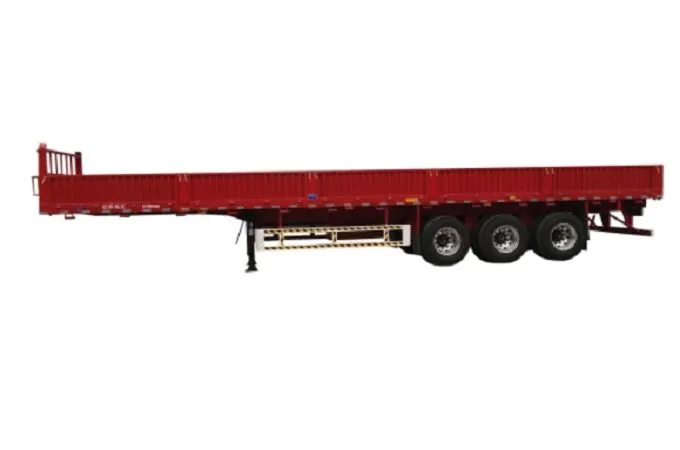

We also pay close attention to the number and placement of the axles. Our engineers work to find the optimal balance between the number of axles needed to support the load and the impact on the turning radius. In some cases, we may use special axle configurations or suspension systems to reduce the turning radius without sacrificing the trailer's stability and load-carrying capacity.
In addition, we use high-quality hitches that are designed to provide a smooth and efficient turning motion. These hitches allow the trailer to make tight turns without putting excessive stress on the tractor unit or the trailer itself.
Comparing the Turning Radius of Our Dropside Semi-Trailers with Other Types
It's interesting to compare the turning radius of our dropside semi-trailers with other types of semi-trailers, such as Van Semi Trailer-40ton Van Box Body Truck and Fence Semi Trailer with three axles.
Van semi-trailers, which are typically used for transporting goods that need to be protected from the elements, often have a similar turning radius to dropside semi-trailers of the same length. However, the boxy shape of the van trailer can sometimes make it more difficult to maneuver in tight spaces compared to a dropside trailer, which has an open side design.
Fence semi-trailers with three axles, on the other hand, may have a larger turning radius due to their longer length and the additional weight distribution of the three axles. This can make them less suitable for applications that require frequent turning and maneuvering in tight spaces.
Choosing the Right Dropside Semi-Trailer Based on Turning Radius
When choosing a dropside semi-trailer, it's important to consider the specific application and the turning requirements. If you need to operate in urban areas or tight spaces, a trailer with a smaller turning radius is essential. You should also consider the type of loads you will be carrying and the frequency of turning and maneuvering.
At our company, we offer a wide range of Dropside Semi Trailers with different turning radii to meet the diverse needs of our customers. Our sales team is always available to help you choose the right trailer based on your specific requirements. We can provide detailed information about the turning radius of each trailer model and help you make an informed decision.
Conclusion
In conclusion, the turning radius of a dropside semi-trailer is a critical factor that affects its maneuverability and usability. As a dropside semi-trailer supplier, we are committed to designing and manufacturing trailers with optimal turning capabilities. By understanding the factors that affect the turning radius and choosing the right trailer for your specific application, you can ensure that your transportation operations are efficient and successful.
If you are interested in learning more about our dropside semi-trailers or need help choosing the right trailer for your needs, please feel free to contact us. Our team of experts is ready to assist you in making the best decision for your business.
References
- Transportation Research Board. (2016). Highway Capacity Manual. National Academies Press.
- SAE International. (2019). Vehicle Dynamics Terminology. SAE International.