


Can a Tri - Axle Semi Trailer Tipper be used for transporting oversized cargo?
As a supplier of Tri - Axle Semi Trailer Tippers, I often get asked whether these trailers can be used for transporting oversized cargo. This is a crucial question for many businesses in the transportation and logistics industry, as the ability to handle oversized loads can significantly expand operational capabilities and increase profitability. In this blog post, I will delve into the feasibility of using Tri - Axle Semi Trailer Tippers for transporting oversized cargo, considering various factors such as design, legal regulations, and practical challenges.
Understanding Tri - Axle Semi Trailer Tippers
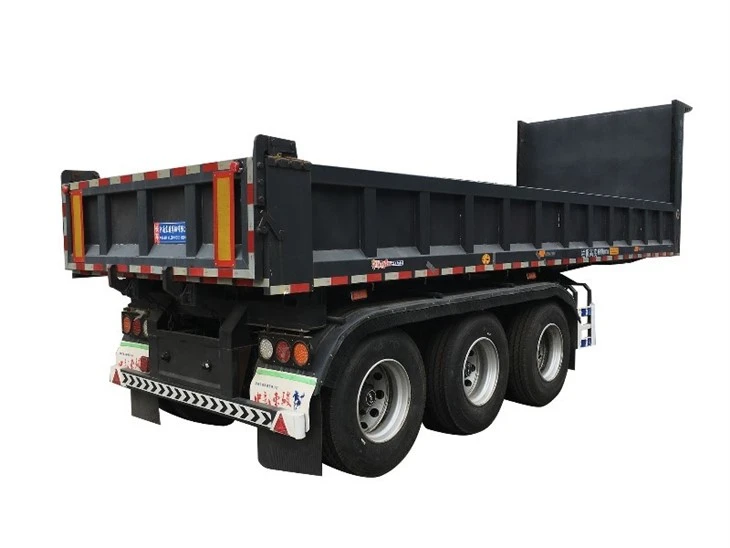
Before discussing their suitability for oversized cargo, let's first understand what Tri - Axle Semi Trailer Tippers are. A Tri - Axle Semi Trailer Tipper is a type of semi - trailer with three axles that is designed primarily for hauling and dumping loose materials such as sand, gravel, and construction debris. These trailers are equipped with a hydraulic system that allows the trailer bed to be tilted, enabling the quick and efficient unloading of the cargo.
The Tri - Axles Flatbed Semi Trailer Tipper and 3 Axles Semi Trailer Tipper are common variations of Tri - Axle Semi Trailer Tippers. They are known for their robust construction, high load - carrying capacity, and versatility in different types of terrains and working conditions.
Design and Structural Considerations
One of the first aspects to consider when determining if a Tri - Axle Semi Trailer Tipper can transport oversized cargo is its design and structural integrity. These trailers are typically built to handle heavy loads, but oversized cargo may present unique challenges.
The frame of a Tri - Axle Semi Trailer Tipper is designed to distribute the weight of the cargo evenly across the three axles. However, oversized cargo may have an irregular shape or weight distribution, which can put excessive stress on certain parts of the frame. For example, if the cargo is concentrated at one end of the trailer, it can cause uneven loading on the axles, potentially leading to premature wear and tear on the suspension system and tires.
In addition, the height and width of the trailer may also limit its ability to carry oversized cargo. Most Tri - Axle Semi Trailer Tippers have standard dimensions that comply with general transportation regulations. If the cargo exceeds these dimensions, it may not fit properly on the trailer or may pose a safety hazard during transit.
Legal Regulations
Transporting oversized cargo is subject to strict legal regulations in most countries. These regulations are in place to ensure the safety of other road users and to protect the infrastructure. When using a Tri - Axle Semi Trailer Tipper for transporting oversized cargo, it is essential to comply with these regulations.
In many regions, transporting oversized cargo requires obtaining special permits. These permits typically specify the maximum dimensions, weight limits, and the route that the vehicle must take. Failure to obtain the necessary permits can result in hefty fines and legal consequences.
Furthermore, some areas may have restrictions on the movement of oversized vehicles during certain times of the day or on specific roads. For example, heavy traffic areas or roads with low bridges may not be suitable for transporting oversized cargo. As a supplier, I always advise my customers to check the local regulations before attempting to transport oversized cargo with a Tri - Axle Semi Trailer Tipper.
Practical Challenges
Even if the design and legal requirements are met, there are still practical challenges associated with using a Tri - Axle Semi Trailer Tipper for transporting oversized cargo.
Maneuverability is a significant concern. Tri - Axle Semi Trailer Tippers are relatively large vehicles, and oversized cargo can further limit their ability to navigate tight corners, narrow roads, and congested areas. This can make it difficult to reach the destination safely and efficiently.
Loading and unloading oversized cargo can also be a complex process. Special equipment may be required to lift and position the cargo on the trailer. Additionally, the hydraulic tipping mechanism of the Tri - Axle Semi Trailer Tipper may not be suitable for all types of oversized cargo. For example, some oversized items may not be able to be unloaded by simply tilting the trailer bed.
Visibility is another practical issue. The presence of oversized cargo can obstruct the driver's view, increasing the risk of accidents. Extra precautions such as using additional mirrors or spotters may be necessary to ensure safe operation.
Advantages of Using Tri - Axle Semi Trailer Tippers for Oversized Cargo
Despite the challenges, there are also some advantages to using Tri - Axle Semi Trailer Tippers for transporting oversized cargo.
Firstly, the high load - carrying capacity of these trailers means that they can handle relatively large and heavy oversized items. This can be beneficial for industries such as construction and mining, where transporting large equipment and materials is common.
Secondly, the hydraulic tipping mechanism can be useful in some cases. If the oversized cargo consists of loose materials or items that can be easily dumped, the ability to quickly unload the cargo can save time and labor costs.

Case Studies
To illustrate the feasibility of using Tri - Axle Semi Trailer Tippers for transporting oversized cargo, let's look at some real - world examples.
In a construction project, a company needed to transport large pre - cast concrete beams to a building site. By using a Rear Dump Semi Trailer, which is a type of Tri - Axle Semi Trailer Tipper, they were able to load and transport the beams safely. The company obtained the necessary permits and made sure to secure the beams properly on the trailer. Although the maneuverability was a challenge, they were able to complete the transportation successfully.
In another case, a mining company used a Tri - Axle Semi Trailer Tipper to transport oversized mining equipment. They had to modify the trailer slightly to accommodate the irregular shape of the equipment. With careful planning and compliance with legal regulations, they were able to transport the equipment to the mining site without any major issues.
Conclusion
In conclusion, while a Tri - Axle Semi Trailer Tipper can potentially be used for transporting oversized cargo, it is not without its challenges. Design and structural considerations, legal regulations, and practical issues must all be carefully evaluated before attempting such a transportation task.
However, with proper planning, modification, and compliance with regulations, Tri - Axle Semi Trailer Tippers can offer a viable solution for transporting oversized cargo in certain situations. As a supplier, I am committed to providing my customers with high - quality Tri - Axle Semi Trailer Tippers and the necessary advice to ensure safe and efficient transportation of all types of cargo, including oversized items.
If you are considering using a Tri - Axle Semi Trailer Tipper for transporting oversized cargo, I encourage you to contact me for more information. We can discuss your specific requirements and work together to find the best solution for your transportation needs.
References
- Federal Motor Carrier Safety Administration. (2023). Regulations on Oversized and Overweight Loads.
- American Trucking Associations. (2023). Guidelines for Transporting Specialized Cargo.
- Construction Equipment Magazine. (2022). Case Studies on Transporting Oversized Construction Materials.